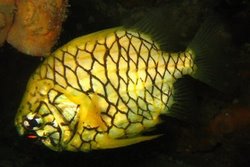
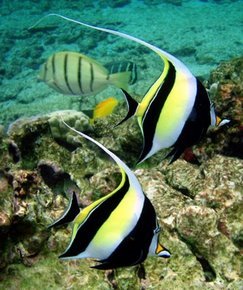
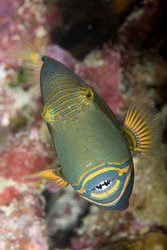
If you have any additional information or care tips for the Pyramid Butterflyfish please leave us a comment below.





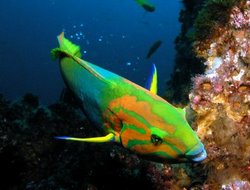



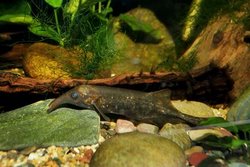





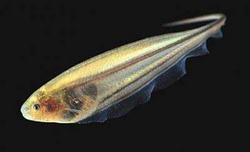














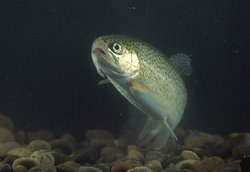
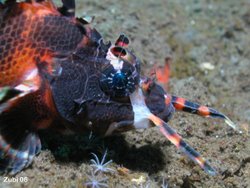
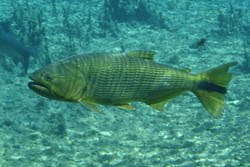

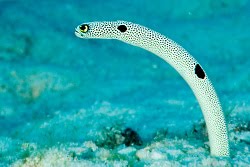





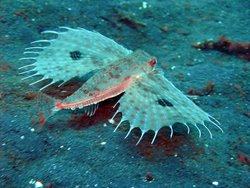


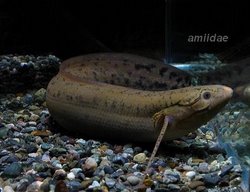
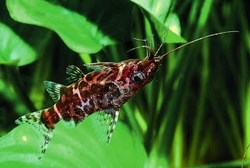
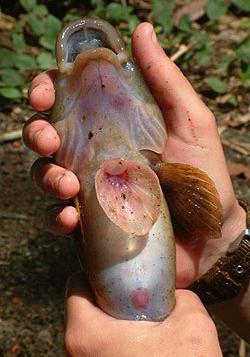
 The African Butterfly Fish or Pantodon buchholzi is an odd looking freshwater fish that is found in many lakes in Africa. As you can see, this fish has a series of strange fins that look like bird's wings, a lot like the Flying Fish of the ocean. African Butterflyfish are speckled with a dark black or brown body. They are not very large only growing to about 4" in maximum length.
 This fish's strange appearance makes it popular in the world of aquatic pets. They only require an aquarium of about 40 gallons with the following water conditions, 75-86° F, KH 1-10 and pH 6.9-7.1. Be sure you provide them with plenty of plants to hide in and a tight lid to keep them from jumping to their deaths. In the wild, you will often see these fish toward the surface awaiting their prey to swim by or an insect to fall onto the surface. In an aquarium they are almost always found near the surface as well and should be fed brine shrimp, small fish, insects and other freeze-dried foods. You can check out the African Butterfly Fish in the video below...


 The Copperband Butterflyfish or Chelmon rostratus is just one of the over 120 different species of Butterflyfish in the world. This particular species is found in the Indian Ocean, and can be differentiated from the others by its false eyespot on the rear dorsal fin, and by its long slender nose and mouth which it uses to find food in tight spots. They also have orange vertical stripes that run through their white bodies, and can grow to about 8" in maximum length. You can check out the Copperband Butterflyfish underwater in the video below...
 Copperband Butterflyfish should not be kept with other Butteflyfish, but can be kept with most other peaceful saltwater fish.

 The Raccoon Butterflyfish or Chaetodon lunula has the amazing ability to turn its colors darker and take on a blotchy appearance to blend in to its surrounding at night or when threatened. Also known as the Crescent-masked Butterflyfish or the Lunule Butterflyfish this species of Butterflyfish from the Chaetodontidae family can grow up to 8" (20 cm) in length.
 Although not considered to be an extremely aggressive fish they should not be put into a tank with Lionfish or Triggerfish and they do not get along.