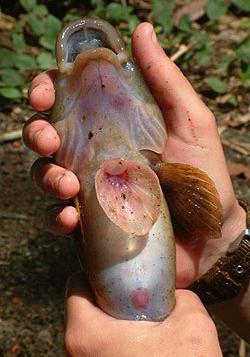






















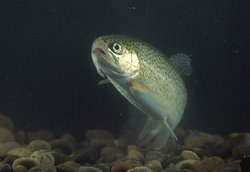





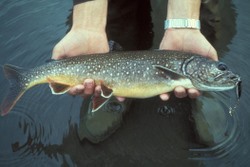
 Bull Trout or Salvelinus confluentus are found exclusively in North America in places like British Columbia, Washington State, Oregon, Montana, Idaho and parts of Nevada. These fish used to be known as Dolly Varden, but around 1980 the Dolly Varden was re-classified as Salvelinus malma. Unfortunately, like many other species on our planet, Bull Trouts are listed as threatened under the Endangered Species Act.
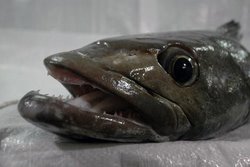
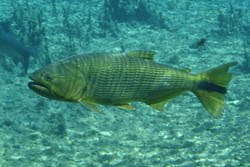
 Bull Trout are a species of Char that can grow to about 41" (103cm) in length and can weigh up to 32lbs (14.5kg). These fish can be distinguished from other Char by their rather large head and mouth. They also lack the spots on their dorsal fins that their close relative the Brook Trout has. Bull Trout also have yellow or orange spots on their backs and don't have a forked tail fin like the Lake Trout. You can check out a more footage of the Bull Trout as well as some fantastic scenery from Western Canada in the video below...
One of the reasons that the Bull Trout is listed as endangered, is that they have a very specific habitat demand. Water temperatures of below 55F (14C) is required as well as clean gravel beds and nice deep pools. Cold lakes and large rivers are they favorite areas to inhabit. Since these fish will often migrate to spawn, man made dams have severely hampered their ability to reproduce. These freshwater fish begin their lives feeding on zooplankton, but as they grow larger their diet turns mostly to small fish and Salmon eggs. If you have any additional information about the Bull Trout leave us a comment below!