
Find Your Fish

Showing posts with label Fresh Water Fish. Show all posts

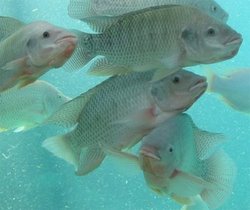
Mozambique Tilapia (Oreochromis mossambicus)


The Mozambique Tilapia or Oreochromis mossambicus is just one of the 100s of different Cichlid species of fish known as Tilapia. This particular species goes by a couple different names including Blue Kurper, Tilapia Kafuensis, Kafue Bream and the Three Spotted Tilapia. This species is native to Southern Africa and is found in many tropical areas around the world, where it is used for aquaculture. Like other Tilapia, they are able to survive in very harsh conditions compared to many other freshwater fish. It can adapt to temperatures below 50 °F (10 °C) and above 100 °F (38 °C), and can also tolerate brackish waters. They also will eat a large variety of foods, which not only makes them a perfect candidate for fish farming, but also difficult to get rid of when introduced to the wrong area.  These fish are considered to be an invasive species in parts of the world where they have been introduced to control mosquitoes.

These fish are not particular large, only grow to about 14" (35cm) in length and weighing in at 2-1/2 lbs (1.13KG). They can live for about 11 years.  Like other species of Cichlids, these fish are mouth brooders, which means that after the eggs are laid and fertilized the female will then scoop them up into her mouth for protection until they hatch.  You can check out the Mozambique Tilapia underwater in the video below.


If you have any additional information about the Mozambique Tilapia please leave us a comment below.


Adolfo's Catfish (Corydoras adolfoi)


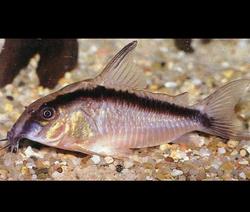
The Adolfo's catfish or Corydoras adolfoi is a species of freshwater fish that often makes its way in the aquarium trade. This tropical catfish is not very large, only growing to lengths of about 2.2" (5.7cm). They are part of the Callichthyidae family, and first originated in South America, specifically Brazil.  They have a silver body with a black band near the base of the caudal fin and over the eye.

One of the reasons they are so popular in the aquarium trade is their ability to breed in captivity. Simply provide them with a plant or stone for them to attach their eggs to and wait. It only takes about 4 days after the eggs are laid for the fry to hatch. Like other species of Catfish, they are also good at keeping the bottom of the tank clean.  This fish are sometimes called Adolfo's Cory and require a 25 gallon tank with the following water conditions, 70-79F, 6.0-7.5ph.  They are a peaceful community fish that is considered to be very easy to take care of.  You can check out the Adolfo's Catfish in an aquarium in the video below.

 If you have any additional information about the Adolfo's Catfish please leave us a comment below.

Waterfall Climbing Cave Fish (Cryptotora thamicola)


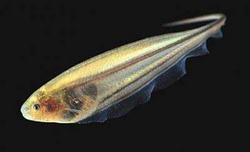
The Waterfall Climbing Cave Fish or Cryptotora thamicola is one of the rarest, and most elusive fish in the world! This species is native only to two caves in Thailand! This freshwater fish has specially developed fins with microscopic hooks that allows it to climb up waterfalls and attach itself to the rock in the fast moving waters! It goes by a couple different names including the Cave Angelfish and the Eyeless Cave Fish. Since this Angelfish spends its entire life in darkness, it has lost its pigmentation, as well as its eyes! You can check out this amazing fish in the videos below...

If you have any additional information about this rare species of fish please leave us a comment below.


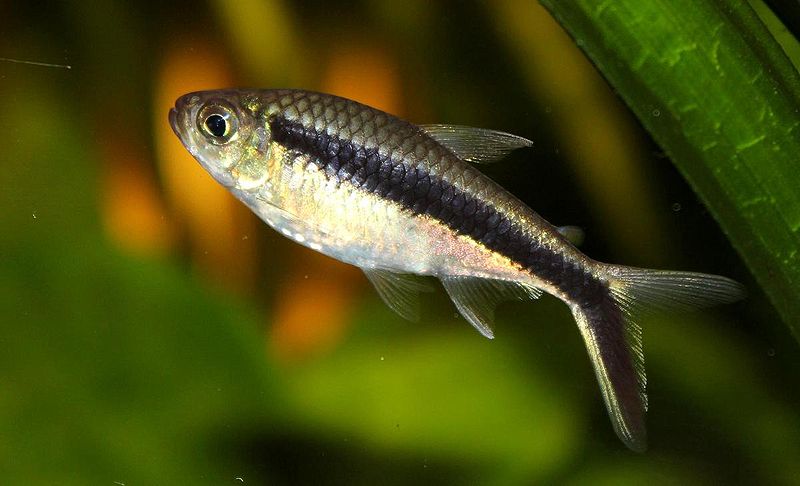
Penguin Fish (Thayeria boehlkei)

The Penguin Fish or Thayeria boehlkei is just one of the many different species of Tetra fish.  Tetras are from the Characidae family, and can be distinguished from other fish by the presence of a small adipose fin between the dorsal and caudal fins.  They all originate in the tropical freshwaters of the Africa, Central America and South America.

Penguin Fish go by a few different names including Blackline Penguinfish, Blackline Thayeria, Hockey-Stick Tetra, and Penguin Tetra.  These fish are small, only growing to about 3" in length.  They are the perfect starter fish, able to survive in the following water conditions, 64-82° F, KH 4-8 and pH 5.8-8.5.  Penguin Fish work well in a group of six or more, and are great for a community fish tank.  They will accept a variety of foods, and are very eager feeders making them one of the easiest freshwater aquarium fish to care for.  Providing them with live plants and plenty of hiding spaces will keep them happy, and stress free.  You can see how the Penguin Fish would look swimming in your tank in the video below. 
 

It is possible to breed Penguin Fish in an aquarium setting.  Slightly acidic water is said to help encourage the breeding process.  The female's belly will grow larger and she will eventually lay her eggs.  It only takes about 15 hours for the eggs to hatch, and then the baby fry should be separated from their parents or risk being eaten.

If you have any additional information about the Penguin Fish please leave us a comment below. 


Indo-Pacific Tarpon (Megalops cyprinoides)


The Indo-Pacific Tarpon or Megalops cyprinoides is a fish capable of living in freshwater and saltwater. Also known as the Oxeye, Broussonet Tarpon, Hairen or the Ten Pounder, this fish can grow to about 1 meter (3.3 feet). If you have had the pleasure of hooking one of these fish you probably have noticed that they fight much harder then most fish of the same size. They are also surface jumpers, and will certainly give you a run for your money on light tackle with long runs, and lots of stamina.

This species looks a lot like it close relative, the much bigger Atlantic Tarpon. It's body is covered with large scales with a blue-grey coloration and a silver belly. They have a forked tail and an elongated dorsal fin. These fish have a large mouth compared to their body size with a protruding jaw that is pointing upward, and no real teeth. If you are fishing for Indo-Pacific Tarpon you will generally find them in estuaries and coastal waters, rivers and mangrove forests. The best way to catch these Tarpon are with flies, spinners, sub-surface lures or shrimps.

These fish have made their way into the aquarium trade, but they require a MASSIVE tank so they are only recommended for the advanced aquarium enthusiasts.  You can check out one in an aquarium in the video below.


POP QUIZ: Do you know the names of the other fish featured in the video above?


Logperch (Percina caprodes)

The Logperch or Percina caprodes is sometimes known as the Common Logperch, Manitou Darter and the Zebra Fish. This is one of the eleven different species of Logperch from the Percidae family. This is the most widespread of the Logperches and is found in many places in the eastern United States and Canada. They typical inhabit gravel streams or lakes and can grow to about 7" (18cm) in length. As you can see in the pictures, they have a skinny body that is covered with vertical bars and a subterminal mouth, which simply means pointing downward, towards the bottom. These fish are scavengers that will  turn over as many as ten small rocks per minute searching for food.  You can watch these hard workers, as well as some other unidentified species in the video below.

 
Logperch are not listed as an endangered species, but increasing damming and the introduction of the invasive species the Round Goby makes them very vulnerable.  Like other Darters, they are not schooling fish and are often seen alone or in a small group.  They are an important part of the ecosystem and fall prey to birds, Largemouth Bass, Lake Trout, Walleye, Pike, Rock Bass and Burbot.  They are edible, but are not normally caught by fisherman due to their small size.     
POP QUIZ: Can you name the other species of fish in the video featured above?


Kwi Kwi (Hoplosternum littorale)


The Kwi Kwi or Hoplosternum littorale is a species of Armoured Catfish from the Callichthyidae family. This fish features an armor-plated body that protects itself from potential predators. These freshwater fish go by several different names throughout the world including, Tamuatá, Atipa, Hassar, Cascadu, Busco and Currito.

This species of catfish can grow to about 9-1/2" (24cm) in length, with the males tending to be a bit larger then the females. Originally found in South America, this fish has been spotted in Florida and is also becoming more and more popular in an aquarium setting. Believe it or not, this fish can breathe both with gills and through its intestines and is a very lively, entertaining fish! They can grow to about 4 years old and are nocturnal feeders, munching on crustaceans, larvae and aquatic insects.

 Kwi Kwi reproduce after the first year, with spawning normally being triggered by the first rains and occurs in the warm and rainy season. Like other callichthyine, this fish builds a bubble nest. This species is said to have one of the most complex nest structure. This bubble nest is designs to be rich with oxygen which helps the eggs develop even in poor water conditions. It also provides protection from potential predators. You can check out a Kwi Kwi building a bubble nest in the video below.


If you have any additional information about the Kwi Kwi please leave us a comment below.


Vampire Tetra (Hydrolycus scomberoides)

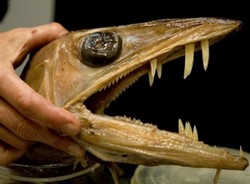
Like something out a fishy nightmare the Vampire Tetra or Hydrolycus scomberoides has extra long sharp teeth that protrude out of its mouth like that of a vampire. They use the two largest fangs to impale their unsuspecting prey with amazing speed!  Also know as the Sabertooth Tetra or Payara, this freshwater fish can be kept in an aquarium and can grow to be VERY large. Under the right conditions, these fish can grow to several feet in length and weigh in at over 30lbs! They are not the easiest to care for and require lots of filtration and regular water changes, as well as lots of live foods. Vampire Tetra are of the tropical variety and require a temperature of 75 to 80 degrees in an aquarium of 100 gallons or more.   These fish originate from South America where they are caught in the waters of the amazon basin. 

Like the Piranha and Snakehead, one of the best parts of owning this type of aggressive carnivorous fish is feeding time!  Here is some footage of the Vampire Tetra being fed goldfish.


If you have any additional information about the Vampire Tetra please leave us a comment below.

Cuckoo Catfish (Synodontis multipunctatus)

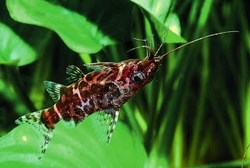
The Cuckoo Catfish or Synodontis multipunctatus at first glance seems like your average freshwater catfish, but they have a very devious side. In the wild this species will attack cichlid's nesting places devouring their eggs. As if that wasn't bad enough, they will also drop some of their own eggs into the nesting place where the unsuspecting mother will take care of them in her mouth along with her remaining eggs. The Cuckoo Catfishes eggs will hatch before the cichlids and then the real terror begins. The much bigger Cuckoo Catfish babies will feast on the other eggs and baby cichlid fish as they hatch inside the mother's mouth! Once they are done feasting they come out of their "mothers" mouth and the unsuspecting cichlid fish actually believe them to be their own!  They will take care of the baby Cuckoo Catfish until they are big enough to fend for themselves. Don't believe me? See it for yourself in the amazing video below from National Geographic!


When the Cuckoo Catfish is not in the wild it is far less sinister. Also known as Cuckoo Synodontis or the Multi-spotted Catfish, they are often kept in a freshwater aquarium and are said to be quite easy to take care of provided they have plenty of places to hide. This species of Catfish can grow to about 10" (25cm), and will accept flakes, pellets and a variety of fresh and frozen foods. If you have any additional information about the Cuckoo Catfish please leave us a comment below.

Shovelnose Sturgeon (Scaphirhynchus platorynchus)


The Shovelnose Sturgeon or Scaphirhynchus platorynchus is one of the smallest of the freshwater sturgeons growing to about 30" in length, and weighing about 5 lbs maximum. Also known as the Sand Sturgeon, Hackleback or Switchtail, these fish are sought after not only for their flesh, but for their eggs as well, which are using to make caviar.  As you can see in the picture above, this fish has bony scutes along the sides and back, and four barbels on the underside of the rostrum. These four barbels form a straight line.  You can learn how to tell the difference between a Lake Sturgeon, a Pallid Sturgeon and a Shovelnose Sturgeon in the video below.

Shovelnose Sturgeon are found in the Missouri River and the Mississippi River systems. They use their vacuum-like mouth to suck up its food, which included insect larvae and small fish as well as crustaceans.  Because of its slow growth rate, late sexual maturity and the fact that it doesn't spawn every year, this fish is very vulnerable to overfishing.

If you have any additional information about the Shovelnose Sturgeon please leave us a comment below.


Black Piranha (The Fish With The Most Powerful Bite)


The Black Piranha or Serrasalmus rhombeus is a freshwater fish found in the Amazon and Orinoco river basins in South America.  This predator is known for its amazing bite!  In fact, the Black Piranha has the most powerful bite of any animal in history, even a T-Rex!  Their highly developed jaw muscles allow the black piranha to exert bite force equivalent to 30 times its bodyweight!  This is more then the Great White Shark and even more then it's prehistory cousin the Megalodon!  You can check out their powerful bite in the video below.   


Black Piranhas are light colored when they are young with black spots, but as they mature their bodies turn black and their eyes turn red.  This fish does is not a swarm hunter like is close relative the Red-bellied Piranhas, but it is still considered to be a dangerous fish.

They are sometime kept in an aquarium of at least 100 gallons and can grow to about 16" in length.  Dim lighting is said to make the Piranha feel at home.  As you can imagine they are a carnivore that needs plenty of live foods. 

If you have any additional information about the Black Piranha please leave us a comment below.


Auratus Cichlid (Melanochromis auratus)


The Auratus Cichlid or Melanochromis auratus is a freshwater fish from Lake Malawi in Africa.  Also known as the Malawi Golden Cichlid, this fish is born a bright yellow color with the juveniles having two black stripes on their sides, and one on their dorsal fin.  As the fish begins to mature these lines will turn more blue.  The males of this species will become black with golden stripes, almost the opposite of their female counterparts.

Auratus Cichlid are often kept in an aquarium setting, but need a lot of room and they can be quite aggressive.  They will accept most aquarium foods and are considered to be quite hardy.

This species of Cichlid is a maternal mouthbrooder, which means that the mother will actually keep the baby fish in her mouth protecting them from potential predators.  The fry will occasionally come out of the mouth, but still stay close to the mother just in case they need to run back in.  This occurs for a period of about 4 weeks.  You can see this mouth brooding in action in the video below.


If you have any additional information about the Auratus Cichlid please leave us a comment below.


Leaping Mullet (Liza saliens)


The Leaping Mullet or Liza saliens is a freshwater fish from the Mugilidae family that is found throughout Europe. It can also survive in brackish waters of the Mediterranean Sea, Black Sea, Sea of Azov and the Caspian Sea.  These fish get their names from their ability to jump right out of the water with ease.

The leaping mullet breeds in the summertime months and will produce between five hundred and two thousand eggs at a time. The newly hatched fry will feed on their yolk sac and grow quite quickly. Once they become older they will feed on algae and vegetable matter.  Leaping Mullets can grow to about 40cm in length (16").

If you have any additional information about the Leaping Mullet please leave us a comment below.


Lionhead Cichlid (Steatocranus casuarius)

The Lionhead Cichlid or Steatocranus casuarius is a popular freshwater tropical aquarium fish originally found in Pool Malebo and the Congo River in Africa. This species of Cichlid goes by a few different common names including Blockhead Cichlid, African Blockhead, Buffalohead, Humphead Cichlid, Lionhead, Lumphead and Buffalo Cichlid. As you can see in the pictures, they get their nicknames from the large hump on the top of their heads.  The picture below shows a juvenile Lionhead Cichlid, their heads tend to become more prominent as they grow older.  
Male Lionhead Cichlids can grow to about to about 4 1/2" (11 cm) with the females being a bit smaller in size. When in an aquarium they are said to be found on the bottom and have jerky movement much like that of a Goby. They have a smaller swim bladder then most fish which allows them to stay on the bottom with ease.  You can check them out in an aquarium setting in the video below. 

An aquarium with the following conditions is suitable for the Lionhead Cichlid Hardness: 3 - 17° dH, Ph: 6.0 - 8.0, and Temperatures at 73 - 82 ° F (23 - 28 ° C). These fish are omnivores that should be fed a variety of foods including algae, flake, pellet, live foods and frozen foods. A good trick to keep your water clean is to feed them 2 to 3 times a day in smaller amounts instead of a large quantity once a day.  They normally get a long well with other fish and will be happier if they are provided a few good hiding spots.

If you have any additional information about the Lionhead Cichlid please leave us a comment below.

Scat (Scatophagus argus)


The Scat fish or Scatophagus argus is one of only four known species in the Scatophagidae family.  This fish has the ability to survive in saltwater, brackish water and freshwater.  Also known as the Spotted Scat and the Argus Fish, they are often kept in an aquarium setting.  Scats have an oblong body that is laterally compressed.  It has a bunch of dark spots on it that become fainter as they grow older.  This fish is greenish brown with younger fish tending to have some red on their fins.   

Scats are found in the Indian and Pacific Oceans and can grow to about 12" (300mm) in length.  In the wild they are scavengers that will eat whatever they can find.  In fact their scientific name actually means excrement eater!  This helps in an aquarium because they are not picky eaters and will help to keep the tank clean.  This fish will eat pretty much anything including green foods such as spinach, peas, flake foods and lettuce.  Triggerfish are said to be a good tankmate for these fish.  You can check out a Scat swimming in the video below.   

If you have any additional information about the Scat including care tips please leave us a comment below.


Striped Mullet (Mugil cephalus)

The Striped Mullet or Mugil cephalus is a fish from the Mugilidae family which consists of about 70 different species.  Striped Mullet fish are bluish gray or green along the back with silver on the sides and a white underbelly.  They have a series of black horizontal bars that run down their bodies with a small mouth and blunt nose.

Also known as the Black Mullet, Sea Mullet and Fatback, this fish can grow to about 3' in length and and weigh up to 12lbs.  These fish can survive in both freshwater and saltwater and are found in the Pacific Ocean and many warm seas throughout the world.

Striped Mullet are schooling fish that are often seen leaping out of the water.  These fish will ingest mud from the bottom and work it through their gill rakers and teeth, filtering out the plant and animal material and spitting out the rest.  They are said to have gizzard-like stomachs for grinding food up.  You can check out a large group of Striped Mullet in the video below.      

If you have any additional information about the Striped Mullet please leaves us a comment below.

Aquarium Fish Of The Month - Spotted Cardinalfish


Still Can't Find The Fish You Are Looking For? Search For It Below Or Send Us An E-Mail!

Fish Index Followers