
Find Your Fish

Showing posts with label Jacks. Show all posts

Banded Rudderfish (Seriola zonata)


The Banded Rudderfish or Seriola zonata is the one of the smallest species of Amber Jacks. The juveniles of this species have 6 black vertical bands running down their bodies. As they grow to over 10" these bands disappear making them much harder to differentiate between other species of saltwater fish, especially the Pilot Fish.   One good way to tell is the very tips of their tails are white. 

These fish are schooling fish that are often found following large creatures in the water and feeding off of their scraps.  Like other Jacks they are sought after by many fisherman and are said to be easy to catch with shrimp, flies and even spoons.  You can check out the Banded Rudderfish underwater in the video below.   

If you have any additional information about the Banded Rudderfish including recipes, please leave us a comment below.


Roosterfish (Nematistius pectoralis)

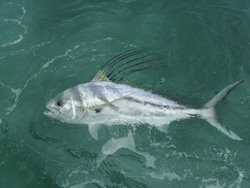
The Roosterfish or Nematistius pectoralis is a very popular sporting fish that in caught in in the Pacific Ocean in places like Costa Rica and the Mexican waters to Panama. This fish, true to its name, has a rather odd rooster comb as dorsal fins!
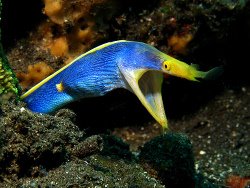
Like its fellow family member the Amberjack, these saltwater fish can get very big, growing to lengths of over 4' and weighing over 100lbs! The Roosterfish is said to put up a ferocious fight but it not the tastiest fish in the world where they are also known as Pez Gallo or Papagallo.
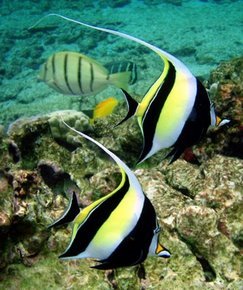
Roosterfish are said to have the ability to amplify sound which helps them catch unsuspecting prey and avoid dangerous predators. Like a lot of intelligent fish Roosterfish are best caught with fresh live bait. If you have a fishing tip or a Roosterfish recipe please share it with the world below...

Greater Amberjacks (Seriola Dumerili)

Greater Amberjacks or Seriola dumerili are the largest of the three different kinds of Amberjack fish which include the Lesser Amberjacks and the Banded Rudderfish. Greater Amberjacks are found in many places around the world in the Mediterranean Sea, the Atlantic Ocean, the Pacific Ocean and the Indian coasts. They are often found in bettween 20 and 100 m in depth.

Greater Amberjacks are a quite popular sporting fish due to their fast swimming abilities which makes a great challenge for even the toughest angler. These sporting fish put up a fantastic fight and are ferocious predators. This type of Amberjack grows to about 6' in maximum length and can weigh in at 80kg! Females of this species grow larger and live longer that the males. Maximum life spand is about 17 years. Sexual maturity is reached at about 5 years of age. They are brownish blue in color and have a band that goes over its eye. When these Amberjacks are young they have vertical stripes on their bodies that fade as they grow older. Often found in schools when they are younger, the Great Amberjack spends more and more time alone as it grows older.

Greater Amberjacks are edible and can be prepared fried, broiled, baked, or grilled for human consumption. They are not the best tasting fish or the worse tasting fish... If you have an Amberjack recipe that you would like to share or fishing tips please leave them in the comments below...

Aquarium Fish Of The Month - Spotted Cardinalfish


Still Can't Find The Fish You Are Looking For? Search For It Below Or Send Us An E-Mail!

Fish Index Followers