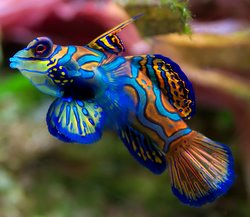
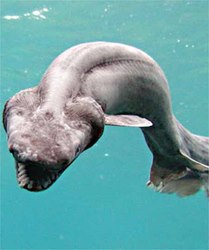
Welcome To The Fish Index! We Are Maintaining A Growing Encyclopedia Of Fish Species Listed From A-Z! Choose From Our Categories Or Browse The Fish Featured Along The Sides By Clicking Their Pictures. Each Fish Includes Detailed Information, Pictures, Video And User Comments! With Over 30,000 Different Species In The World, Our Team Of Fish Experts Are Constantly Being Challenged To Discover New Species. Sample "The Fish Of The Day" Or Browse Our Impressive Selection Of Aquarium Fish!
Don't forget to Like Us On Facebook!
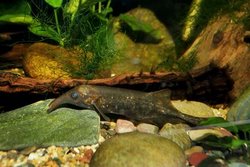
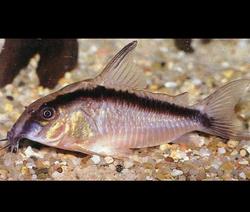
The Bearded Catfish or Scleromystax barbatus is a freshwater subtropical catfish from the Callichthyidae family. This fish was first discovered in the coastal drainage in Brazil. It has since found its way into the aquarium trade, and like other catfish it is a very hardy addition to any community tank. Also known as the Banded Corydoras this fish can grow up to 4" (10cm) in length. The follow water condition are ideal for this species, 6.0–8.0 pH, a water hardness of 2–25 dGH, and a temperature of 83 °F (28 °C). A 20 gallon or more tank is well suited for these fish with plenty of hiding spaces. You can check out the Bearded Catfish in action in the video below...
If you have any additional information about the Bearded Catfish please leave us a comment below.
The Adolfo's catfish or Corydoras adolfoi is a species of freshwater fish that often makes its way in the aquarium trade. This tropical catfish is not very large, only growing to lengths of about 2.2" (5.7cm). They are part of the Callichthyidae family, and first originated in South America, specifically Brazil. They have a silver body with a black band near the base of the caudal fin and over the eye.
One of the reasons they are so popular in the aquarium trade is their ability to breed in captivity. Simply provide them with a plant or stone for them to attach their eggs to and wait. It only takes about 4 days after the eggs are laid for the fry to hatch. Like other species of Catfish, they are also good at keeping the bottom of the tank clean. This fish are sometimes called Adolfo's Cory and require a 25 gallon tank with the following water conditions, 70-79F, 6.0-7.5ph. They are a peaceful community fish that is considered to be very easy to take care of. You can check out the Adolfo's Catfish in an aquarium in the video below.
If you have any additional information about the Adolfo's Catfish please leave us a comment below.
The Dalmatian Molly or Poecilia latipinna is also known as the Marbled Molly and has the ability to survive in freshwater or saltwater. This species of Molly is a hybrid version of the Sailfin Molly which has the same scientific name. As you can imagine, this hybrid version is black and white, much like a Dalmatian Dog.
The Dalmatian Molly is a fairly hardy and inexpensive fish to house in an aquarium. They only grow to about 5" in maximum length, so an aquarium of about 30 gallons or more should do the trick. The following water conditions in an tank with lots of plants are recommended, 68-82° F, KH 10-25, pH 7.0-7.8. This aquarium fish in an omnivore that should be fed a variety of food including, bloodworms, tubifex, brine shrimp and flake food. They work very well in a community tank with other peaceful fish. You can check out this fish in action in the video below...
These fish can be bred in an aquarium fairly easily. Dalmatian Molly fish give birth to live fry about every two months or so under the right conditions. They normally product 12 or more young that are quite large, almost 1/2" long!
If you have any additional tips for the Dalmatian Molly please leave us a comment below.
The Pirarucu or Arapaima gigas is one of the largest freshwater fish in the world and goes by several different names including Paiche, or simply Arapaima. This massive fish can grow to over 14' in length, and weigh in at an astonishing 440lbs! If you can believe it, this fish actually has a bony tongue that has a second set of teeth embedded in it! This odd adaptation helps it chew up its prey with ease. Native to South American this tropical freshwater fish is found in the Amazon River and has also been introduce to several lakes in Thailand and Malaysia. These monsters can survive in low quality water with very low oxygen levels. This is because the Pirarucu is an air breather, and must have access to the surface in order to survive. It uses its swim bladder, which is rich in blood vessels to hold the oxygen needed to breath. You can learn more about the Pirarucu in the videos below...
Arapaima fish will often feed on crustaceans, fish and aquatic animals that get too close to this large fish. They will lay their eggs in early spring before the rainy season. These fish will build a nest, much like the Bluegill, but on a much grander scale. As the rains begin to fall the water rises, and the eggs hatch. Once hatched, the fry are known to retreat into the mouth of the male Arapaima for protection. This is called mouth brooding and is a characteristic shared by some Cichlids. They are also reported to secrete a form of nutrition from their head that feeds their young in the early stages of their lives. This is another trait shared by other fish, including the Red Turquoise Discus.Pirarucu fish are often caught with nets or by spearfishing, and are considered to be very tasty. Take extreme care though if you catch one of these monsters, they can be very dangerous because of their massive size and unpredictable behavior. If you have any additional information about the Pirarucu leave a comment below.
At first glance the Kissing Gourami or Helostoma temmincki may just look like a free loving hippy, but these freshwater fish are actually battling it out more like a couple of 300lbs football players would on the line of scrimmage. You see, the Kissing Gourami's large lips aren't just for looks, the males of this species will actually lock
lips, almost like they are kissing. They are actually pushing on one another
to see which one is the weakest and doesn't get potential breeding rights. Eventually, one of the two will
surrender in defeat. You can check out the Kissing Gourami battle kissing in the video below...
As you can see, they get their name from the thick lips that are sometimes extended out. It is almost as if this aquarium fish is puckering up at you every time you go to feed them. Also known as the Kisser Fish, or the Pink Kisser this species of freshwater Gourami has a silvery peach body with rather large eyes. They can grow to about 12" in maximum length.
Kissing Gourami are inexpensive fish that should be placed in an freshwater aquarium of 30 gallons or more with plants, stones and hiding places. Be careful if you use live plants as this species of Gourami will eat almost anything. The one thing I really like about the this fish is that they help you clean the aquarium by grazing on the algae that tends to grow on the glass. This is very helpful and cuts down on the use of Aquarium Wipes between cleanings. The following aquarium water conditions are recommended, 72-82° F, KH 5-20, and pH 6.8-8.5. If you house these Kissing Gourami be certain that they can access the surface as they are surface breathers. While this fish is kept as a pet in many places in the world, in Southeast Asia it is commercially raised and is a major food source for many people. If you would like to breed a Kissing Gourami fish be sure to put pieces of lettuce on the surface of the water. They will use this to lay their eggs on during the spawning process, and after that the fry hatch they will munch on the lettuce as their first food source. After they grow larger this fish requires a typical omnivore diet of bloodworms, tubiflex, brine shrimp, and flake foods.
The Serpae Tetra or Hyphessobrycon callistus is a great community freshwater aquarium fish due to its peaceful temperament. This type of fish is fairly easy to care for in a smaller tank. This should be kept in schools of 6 or more or they can become slightly aggressive and are known to nip each others fins. They feed on flakes, brine shrimp and some pellet food too. Their striking red, orange and black coloration makes them stand out from the crowd. These fish can only grow to about 1-1/2" but can live up to 8 years old. They should be kept at temperatures of 70 to 82 degrees. This fish is also known as the Red Minor Serpae Tetra or Jewel Tetra.