Find Your Fish

Showing posts with label Dangerous. Show all posts

Red Lionfish (Pterois volitans)


The Red Lionfish or Pterois volitans is a venomous saltwater fish from the Scorpaenidae family that is found primarily in the Indian and Pacific Oceans. This species of Lionfish has been introduced into the Atlantic Ocean and due to the fact that it has no natural predators, it is considered to be an invasive species.

As you can see in the pictures, the Redlionfish has series of venomous dorsal spines that it uses to defend itself from those unlucky enough to get too close. Although the venom from this fish is not considered deadly to humans, it is recommended that you seek medical attention and soak the area in hot water. Those stung can experience difficultly breathing as well as vomiting, headaches and extreme pain. You can learn more about the dangers on the Red Lionfish in the video below. 


There are not many predators of the Red Lionfish, but Nassau and Tiger Groupers have been reported to be able to ingest them. This Lionfish will feed on almost anything they can fit their mouths around. These fish will swallow their prey whole after they corner them with their large fins. This species of Lionfish is nocturnal, feeding from dusk till dawn.  They can grow to about 15" in length and live for 10 years. 

 If you have any additional information about the Red Lionfish please leave us a comment below.

Black Piranha (The Fish With The Most Powerful Bite)


The Black Piranha or Serrasalmus rhombeus is a freshwater fish found in the Amazon and Orinoco river basins in South America.  This predator is known for its amazing bite!  In fact, the Black Piranha has the most powerful bite of any animal in history, even a T-Rex!  Their highly developed jaw muscles allow the black piranha to exert bite force equivalent to 30 times its bodyweight!  This is more then the Great White Shark and even more then it's prehistory cousin the Megalodon!  You can check out their powerful bite in the video below.   


Black Piranhas are light colored when they are young with black spots, but as they mature their bodies turn black and their eyes turn red.  This fish does is not a swarm hunter like is close relative the Red-bellied Piranhas, but it is still considered to be a dangerous fish.

They are sometime kept in an aquarium of at least 100 gallons and can grow to about 16" in length.  Dim lighting is said to make the Piranha feel at home.  As you can imagine they are a carnivore that needs plenty of live foods. 

If you have any additional information about the Black Piranha please leave us a comment below.


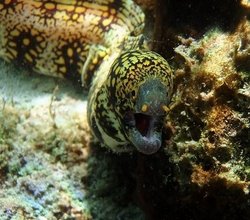
Tassled Scorpionfish (Scorpaenopsis oxycephala)

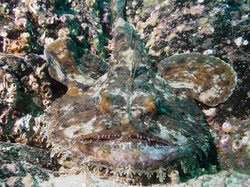
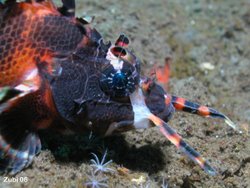
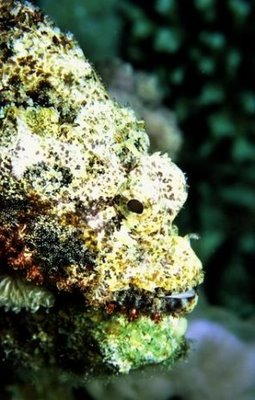
 The Tassled Scorpionfish or Scorpaenopsis oxycephala is a dangerous saltwater fish that is found in the Indian and Pacific oceans. This carnivorous fish has venomous spines that will cause serious pain to the unsuspecting victim that may step on them. This fish are often found in shallow waters in and around reefs.

Tassled Scorpionfish is just one of the over 100 different species of Scorpionfish. This particular species grows to about 14" (36 cm) and can vary in coloration a great deal depending on it surroundings. This fish will have "tassles" or beards below their jaws, hence their name. They mainly feed on smaller fish and crustaceans. This fish will feed by opening its mouth wide and using their gills to create a suction that literally sucks the fish right into their mouths. They will lie in wait on the bottom for an unsuspecting fish to swim to close and then snatch them up with amazing speed.

If you have any additional information about the Tassled Scorpionfish please leave us a comment or watch the Tassled Scorpionfish and other amazing creatures in the video below...


White Marlin (Tetrapturus albidus)

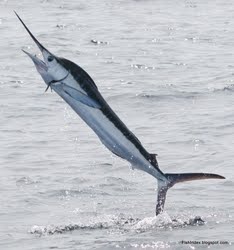
 The White Marlin or Tetrapturus albidus is one of the most sought after sporting fish in the world!  These Billfish can reach lengths of over 8' and can weigh over 160lbs!  Like other Marlins they have a bill that they use to stun fast moving fish. After it successfully hits a fish it will quickly devour them.  You can check out the White Marlin's never say die attitude in the video below... 

White Marlins are found throughout the Atlantic Ocean and in the Caribbean. They are normally found at depths exceeding 300 feet, but are often caught in shallower waters as well. If you are lucky enough to have hooked one of these White Marlins you know just how exhilarating it can be to battle these impressive saltwater fish. Not only are they very large, but they also will make fantastic runs and jumps adding to the excitement of the catch. Be extremely careful with these fish as their bill can cause some serious damage!

These fish can be identified by their dark blue to chocolote brown bodies and white underbellies. White Marlin with almost always have spots on the dorsal fins. Their bodies are covered with embedded scale that have a single sharp point. The dorsal, pectoral and the first anal fin is all rounded.

If you have any additional information or questions about the White Marlin please leave us a comment!

Silver Carp (Hypophthalmichthys molitrix)

The Silver Carp or Hypophthalmichthys molitrix is one of the species of Asian Carp that is threatening to invade and devastate The Great Lakes.  The Silver Carp along with the Bighead Carp where introduced by Catfish farmers in the 1970s to help control algae.  Floods in the 1990s overflowed the ponds that kept these freshwater fish secured and they made their way into the Mississippi River basin.  They have since traveled up the Mississippi and have reproduced so much that they have even become the most abundant species in several areas!  Silver Carps also known as Flying Carp are now considered an invasive species, and should be reported to the DNR if caught anywhere near The Great Lakes.
The ravenous appetite of the Silver Carp along with its ability to reproduce quickly makes it all the more dangerous.  These fish are not small either, growing to over 4' long and weighing in at over 100lbs!  One rather strange, but even more dangerous attribute of these invasive monsters is the fact that they like to jump out of the water when a boat passes by.  This can be very bad for the fishermen and the boats alike!  Just take a look at these videos below to see the Silver Carp jumping like maniacs out of the water!


Another odd characteristic of the Silver Carp is the fact that they have no stomach!  They feed on phytoplankton, zooplankton and detritus.  As you can imagine with these fish, it is in one end and out the other!  Some think that these Carp can be use to control some forms of algae, while other worry about the side effects of introducing this species of Carp.

If you have any additional information or questions about the Silver Carp just leave us a comment.

Bronze Whaler (Carcharhinus brachyurus)

The Bronze Whaler or Carcharhinus brachyurus is a species of shark that is a commonly found near the coast in all the subtropical oceans and seas in the world, with the exception of the east cost of North America. As you can imagine with a name like the Bronze Whaler they are not small, growing to 11' (3.5m) in length and weighing in at 660lbs (300 kg).

Brozne Whaler Sharks go by a couple different names throughout the world including the Narrowtooth Shark, and the Copper Shark. These saltwater fish have a broad snout and are lacking a interdorsal ridge. The Bronze Whaler is actually a grayish bronze in coloration with white on their lower bodies.
These sharks are considered dangerous to humans. They are often found in relatively shallow waters where they feed on schooling fish including Salmon. When they reproduce the Bronze Whaler has up to twenty live pups. They can live to about 30 years old. You can check out the Bronze Whaler in its nature habitat along with some amazing Sardine footage in the video below...

If you have any questions or additional information about the Bronze Whaler shark leave us a comment.

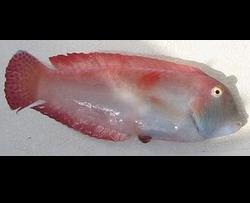
Decorated Rabbitfish (Siganus puellus)

The Decorated Rabbitfish or Siganus puellus is just one of the over 25 different species of Rabbitfish.  This particular species is also sometimes known as the Masked Spinefoot, and was first discovered off the coast of Australia.  Decorated Rabbitfish are usually found in pairs in relatively shallow waters around reefs.

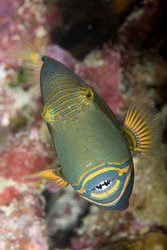
Decorated Rabbitfish are very popular in the aquarium trade because of their beautiful markings, and striking yellow coloration.  These salt water fish have a black stripe that runs from the bottom of their mouth to the tops of their heads, and adds to their unique look.  This black stripe turns into black spots towards the top of its head above the eyes.  These fish can grow to almost 1' in length, so be prepared.    
Masked Spinefoot fish should be kept in a large aquarium of 90 gallons or more with the following water conditions, 72-78° F, dKH 8-12, pH 8.1-8.4 and sg 1.020-1.025.  They get along well with most other species of community fish and can be kept in pairs, but will not tolerate other species of Rabbitfish.  Watch out when you handle these fish, they have dangerous venomous dorsal spines that can leave quite the sting!  They are for the most part, reef safe.  Decorated Rabbitfish are herbivores that should be fed algae and other veggies to keep them healthy and happy.


If you have any additional information about the Decorated Rabbitfish please share your wisdom and leave us a comment!

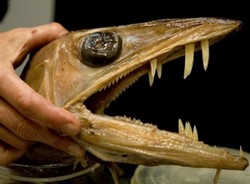
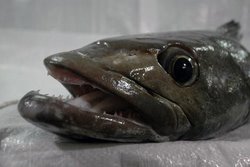
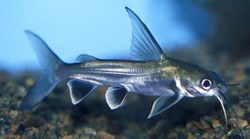
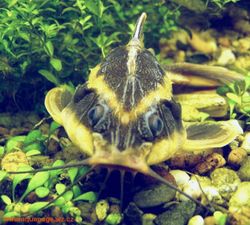
Goonch Catfish (Bagarius yarrelli) The Man Eating Catfish

The Goonch Catfish or Bagarius yarrelli is a man eating freshwater fish! That's right, there have been a series of reports of this massive Catfish attacking individuals in three different villages on the banks of the Kali River in India. It is thought that this fish got the taste for human flesh after eating half burnt human remains discarded from funeral pyres on the river banks.As you can imagine the Goonch Catfish is absolutely huge, growing to over 6' long and weighing well over 150lbs! These fish have broad heads with a very wide mouth filled with sharp teeth that are backward shaped to help them swallow their prey, much like many sharks. Their gills openings are wide and the dorsal and pectoral fins have strong spines. They are normally an olive or brown in coloration matching the muddy river. You can check out the Goonch Catfish with your own eyes in the videos below...


These fish are not normally eaten and most people in India will simply kill them or release them back into the waters. They are considered a nuisance by many other anglers though treat them as trophy fish for their amazing size. If you have any additional information about the Goonch Catfish please leave us a comment below.


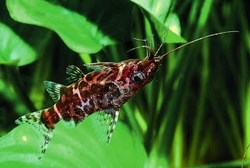
Candiru asu

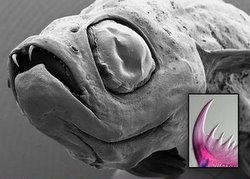
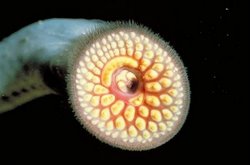
The Candiru asu is one of the most vicious scavengers on the planet. This freshwater fish is found in the Amazon River and will devour pretty much anything that has flesh. They are actually a species of Catfish that has a circle shaped mouth that is full of sharp teeth. These teeth tear apart it victim with ease and leave behind a bullet like hole.

If a school of these fish across a carcass, they will devour it in just a matter of minutes. Just check out the video below to see the Candiru asu in action...

Candiru asu, like the saltwater Hagfish, will literally eat its meals from the inside out. Burrowing into the flesh and chowing down on the organs. There are even reports of human bodies being found in the Amazon River with hundreds of Candiru asu inside! Some believe that this fish will attack, while other insist that it is only a scavenger. Even though they only grow to about 6" in length, they make up for this in numbers much like the Piranha. If you think the Candiru asu is bad, you should check out the plain old Candiru! It will actually swim up a man's penis and attach itself if they are urinating in the water!

If you have any additional information about the Candiru asu please share...

Sea Goblin (Inimicus didactylus)

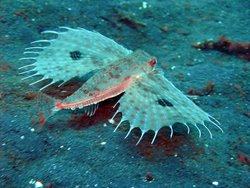
The Sea Goblin or Inimicus didactylus upon first glance, looks a lot like a Stonefish or Frogfish with its many wart like appendages that helps it easily blend into its surrounding. This odd-looking saltwater fish grows to about 8" maximum, and is normally a variation of browns and reds. They are sometimes referred to as the Spiny Devilfish, Longsnout Stinger, Walkman or Bearded Ghoul.
Sea Goblins have a series of sharp venomous spines on their body and "legs" that it uses to walk across the bottom floor in search of food. They can be kept in an aquarium of at least 50 gallons or more, but are not the easiest to care for because of their dangerous spines. The following water conditions are recommended, 72-78° F, dKH 8-12, pH 8.1-8.4 and sg 1.020-1.025. They are carnivores that should be fed a variety of foods including live feeder fish, feeder shrimp, glass shrimp and other meaty preparations.


Probably the coolest thing about these little fish isn't the fact that they can walk, it is their strange wing-like fins that are displayed. This really makes for an interesting addition to any saltwater tank! You can have a look for yourself in the video below...


Greater Weever (Trachinus draco)

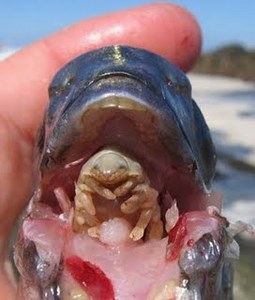
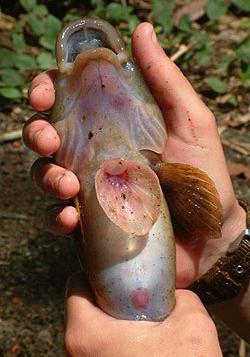
The Greater Weever or Trachinus draco is just one of the eight different species of Weever Fish. This fish can be extremely dangerous, because it has a series of spines that contain venom. This sting can be very painful if touched or stepped on. Like other Weever Fish, they often sit on the bottom with all of their bodies covered except their first set of dorsal fins. For this reason, unsuspecting swimmers often step on the Greater Weever and come away with some serious pain!All this makes the Greater Weever an interesting fish, but get this, they can sometimes contain a tongue eating parasite that actually eats the fishes tongue! After their first meal, this parasite will act as the fishes tongue, living in its mouth and sharing the food that the fish eats. Unbelievably, this is the only ill effects that the parasite has on the fish, making for a very strange partnership of sorts. This makes this parasite the only one in the the world known that can actually replace an organ!

Greater Weever fish are often found in places like the Eastern Atlantic, as well as the Mediterranean and Black Seas. They are not an extremely large saltwater fish only growing to about 53 cm and weighing in at no more than 1.86 kg. If you have additional information about the Greater Weever just leave a comment below!

Cariba Piranha (Pyocentrus cariba)

The Cariba Piranha or Pyocentrus cariba is just one of the many different species of Piranhas on our planet. These freshwater fish are without a doubt one of the most ferocious fish in the world. It is said that in the wild these Cariba will wait under birds nests in season and wait for an unfortunate baby bird to fall out, thendevour them in a matter of seconds. You can get a feel for just how fast these predators are in the videos below...


The Cariba Piranha goes by many different names including the Black Shoulder Piranha, Orinoco Piranha, Black Eared Piranha, and the Venezuelan Red Belly Piranha. They are not very large, only growing to about 16" (40cm), but make up for their small size with their sharp powerful teeth and their ability to form a feeding frenzy in great numbers!The Cariba Piranha has a grey head with orange or red anal and pectoral fins, and a silver body. When they are smaller, these fish tend to have black spots that cover their upper bodies. These spots will fade as the fish grows older. If you have any additional information about the Cariba Piranha that you would like to share please leave us a comment!

Aquarium Fish Of The Month - Spotted Cardinalfish


Still Can't Find The Fish You Are Looking For? Search For It Below Or Send Us An E-Mail!

Fish Index Followers