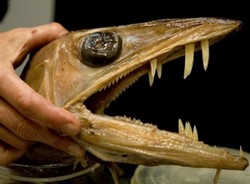
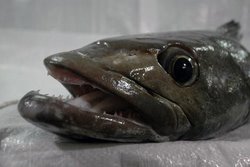
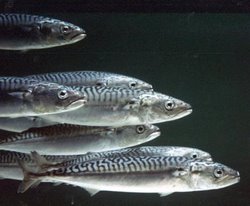
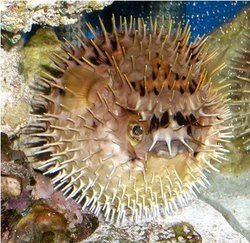
Welcome To The Fish Index! We Are Maintaining A Growing Encyclopedia Of Fish Species Listed From A-Z! Choose From Our Categories Or Browse The Fish Featured Along The Sides By Clicking Their Pictures. Each Fish Includes Detailed Information, Pictures, Video And User Comments! With Over 30,000 Different Species In The World, Our Team Of Fish Experts Are Constantly Being Challenged To Discover New Species. Sample "The Fish Of The Day" Or Browse Our Impressive Selection Of Aquarium Fish!
Don't forget to Like Us On Facebook!
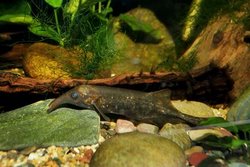
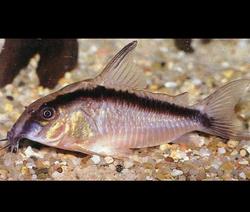
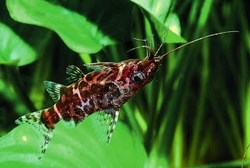
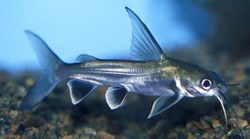
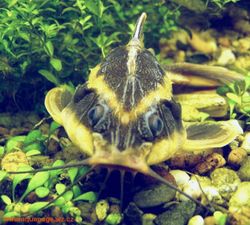
The Bearded Catfish or Scleromystax barbatus is a freshwater subtropical catfish from the Callichthyidae family. This fish was first discovered in the coastal drainage in Brazil. It has since found its way into the aquarium trade, and like other catfish it is a very hardy addition to any community tank. Also known as the Banded Corydoras this fish can grow up to 4" (10cm) in length. The follow water condition are ideal for this species, 6.0–8.0 pH, a water hardness of 2–25 dGH, and a temperature of 83 °F (28 °C). A 20 gallon or more tank is well suited for these fish with plenty of hiding spaces. You can check out the Bearded Catfish in action in the video below...
If you have any additional information about the Bearded Catfish please leave us a comment below.
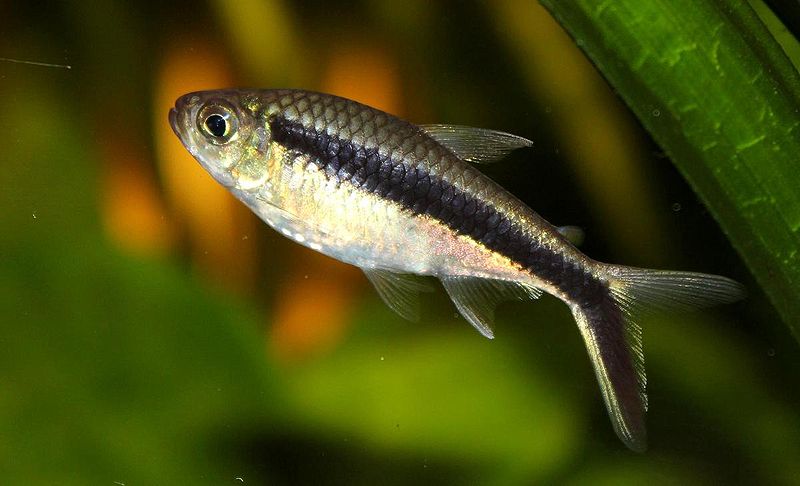
The Penguin Fish or Thayeria boehlkei is just one of the many different species of Tetra fish. Tetras are from the Characidae family, and can be distinguished from other fish by the presence of a small adipose fin between the dorsal and caudal fins. They all originate in the tropical freshwaters of the Africa, Central America and South America.
Penguin Fish go by a few different names including Blackline Penguinfish, Blackline Thayeria, Hockey-Stick Tetra, and Penguin Tetra. These fish are small, only growing to about 3" in length. They are the perfect starter fish, able to survive in the following water conditions, 64-82° F, KH 4-8 and pH 5.8-8.5. Penguin Fish work well in a group of six or more, and are great for a community fish tank. They will accept a variety of foods, and are very eager feeders making them one of the easiest freshwater aquarium fish to care for. Providing them with live plants and plenty of hiding spaces will keep them happy, and stress free. You can see how the Penguin Fish would look swimming in your tank in the video below.
It is possible to breed Penguin Fish in an aquarium setting. Slightly acidic water is said to help encourage the breeding process. The female's belly will grow larger and she will eventually lay her eggs. It only takes about 15 hours for the eggs to hatch, and then the baby fry should be separated from their parents or risk being eaten.
If you have any additional information about the Penguin Fish please leave us a comment below.
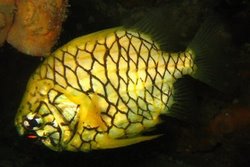
The Pyramid Butterflyfish (Hemitaurichthys polylepis) is just one of the many different species of Butterflyfish. This saltwater fish gets its name from the white pyramid shape on its midsection. This fish's head starts out yellow while it is young, but will turn brown as it matures. These fish can grow up to 7 inches (18cm) in length, and are found on the outer edge of reef systems where they feed on plankton. These fish are also called Yellow Zoster Butterfly or Yellow Pyramid Butterflyfish.
Pyramid Butterflyfish are often seen in schools, and are found in the Western and Central Pacific Oceans, as well as the Eastern Indian Oceans. This fish can be kept in an aquarium, and is considered to be reef safe. They are easy to take care of, but require a large tank of at least 125 gallons. Like most other aquarium fish, providing them with plenty of hiding spaces is always a good idea to keep them happy. You can view the Pyramid Butterflyfish in it's natural environment in the underwater footage below.
If you have any additional information or care tips for the Pyramid Butterflyfish please leave us a comment below.
The Purple Chromis or Chromis scotti is a popular saltwater aquarium fish found at most local pet shops. This species of Chromis is from the Pomacentridae family, which also includes Damsels and Clownfish. They are found in the Western Atlantic Ocean and can grow to about 4" in length. These fish are suitable for an aquarium of 30 gallons or more with the following water conditions, Specific Gravity Range 1.020-1.024, pH Range 8.0-8.4 and Temperature Range 75-82F.
Purple Chromis are omivores that should be fed a variety of foods including flakes, pellets, fresh or frozen algae and meaty foods like brine shrimp, mysis shrimp, planktons, krill, shrimp and scallops. They are generally a peaceful fish, but once they become accustomed to an aquarium they can turn out to be quite territorial. You can check out the Purple Chromis as well as some other saltwater aquarium fish in the video below.
If you have any additional information about the Purple Chromis please leave us a comment below.
The Court Jester Goby or Amblygobius rainfordi is a species of Goby from the Gobiidae family that is not only colorful, but easy to take care of as well. These saltwater fish go by a few different names in the aquarium trade including Old Glory, Red Lined Goby and the Rainford's Goby. Like other Gobies, they are not very large only growing to about 2-1/2" in maximum length. This makes them a perfect starter saltwater fish for an aquarium of 10 gallons or more with the following water conditions, 72-78° F, dKH 8-12, pH 8.1-8.4 and sg 1.020-1.025.
Court Jester Gobies are green and blue with orange/red stripes that run horizontally from their heads, all the way to their tails. These fish are omnivores that should be provided with live rock to munch on, as well as brine shrimp and mysid shrimp. Court Jester Gobies are very peaceful and get along with most other species of fish. Providing this fish with plenty of hiding spots will help keep them stress free and healthy. You can check out the Court Jester Goby in the video below...
If you have any additional observations about the Court Jester Goby please share...
The Dalmatian Molly or Poecilia latipinna is also known as the Marbled Molly and has the ability to survive in freshwater or saltwater. This species of Molly is a hybrid version of the Sailfin Molly which has the same scientific name. As you can imagine, this hybrid version is black and white, much like a Dalmatian Dog.
The Dalmatian Molly is a fairly hardy and inexpensive fish to house in an aquarium. They only grow to about 5" in maximum length, so an aquarium of about 30 gallons or more should do the trick. The following water conditions in an tank with lots of plants are recommended, 68-82° F, KH 10-25, pH 7.0-7.8. This aquarium fish in an omnivore that should be fed a variety of food including, bloodworms, tubifex, brine shrimp and flake food. They work very well in a community tank with other peaceful fish. You can check out this fish in action in the video below...
These fish can be bred in an aquarium fairly easily. Dalmatian Molly fish give birth to live fry about every two months or so under the right conditions. They normally product 12 or more young that are quite large, almost 1/2" long!
If you have any additional tips for the Dalmatian Molly please leave us a comment below.
The Splash Tetra or Copeina arnoldi is a freshwater fish that is best known for its elaborate mating ritual. The male and the female will leap out of the water together and attach themselves to low hanging vegetation. In a matter of seconds, they release the eggs and drop back down into the water. They will repeat this process numerous times until 300 or so eggs are laid. After this, the male will periodically splash the eggs with his tail in order to keep them moist. This continues for a couple days until the fry hatch and fall into the water. This entire process is all well documented in the video below...
Now that you know how Splash Tetra get their names, you can learn a little more about these amazing freshwater fish. They are also known as the Jumping Characin or Spraying Tetra, and have an elongated body which is normally an olive green or brown with a white underbelly. This species of Tetra has a stripe that is barely darker than its body color that runs from its gill cover to its caudal fin. There is another thinner copper band that runs just above the darker stripe. Males of this species tend to have a bit longer fins that are more colorful with red and black outlines then their female counterparts. The bizarre mating ritual and the peaceful temperament of this fish makes it a favorite among aquarium lovers. The following water conditions in a tank of 30 gallons or more is acceptable, 73-79° F, KH 4-8, and pH 5.0-8.0. The Splashing Tetra is not a picky eater and will accept brine shrimp, bloodworms, tubiflex, pellet food and flake food. If you have any tips for caring for Splashing Tetra fish please share!
The Zebra Danio or Danio rerio is a brightly colored, inexpensive aquarium fish that is very easy to care for. This freshwater fish gets its name from the striped pattern that graces its body. These stripes are normally blue or purple with their bodies a silver or gold coloration. They can be kept in schools and are very active in an aquarium setting. An aquarium of only 10 gallons is acceptable, because these fish will only grow to about 3" in maximum length. All of this makes the Zebra Danio a great beginner community fish! You can check out the Zebra Danio spawning in the video below...
In the wild the Zebra Danio is found in Eastern India is freshwater streams or small ponds. The male of this species is almost perfectly cigar shaped with the female having a larger belly.This species of Danio can be bred in an aquarium. The male will normally stay with the same female for its entire life! If you have an aquarium with plants and a temperature of 78F this will encourage breeding. After they lay their eggs it only takes two days before they hatch. The fry can be fed small pieces of Brine Shrimp. As they get older they should be fed a variety of flakes, bloodworms and frozen foods. The following water conditions are acceptable for this fish, 64-75° F, KH 8-12, and pH 6.5-7.0.
Longnose Hawkfish or Oxycirrhites typus is a just one of the over 30 different species of Hawkfish. They can be differentiated from other Hawkfish by, you guess it, their long noses! These saltwater fish have a white body with red stripes that run both horizontally, and vertically. You can check out the Longnose Hawkfish underwater in the video below...
Longnose Hawkfish are one of the most interesting fish to watch, and are considered to have a great personality. For this reason they are often kept in an saltwater aquarium. The follow water conditions are acceptable for this fish, 72-78° F, dKH 8-12, pH 8.1-8.4 and sg 1.020-1.025. They only grow to about 5" in maximum length, so an aquarium or 30 gallons or more is acceptable. Make sure your aquarium is lidded though, because these fish have been known to try and jump out. They can be fed frozen meaty foods and live feeder shrimp.Longnose Hawkfish are safe to put in a reef aquarium, and will even spawn in an aquarium under the right conditions. This makes the Longnose Hawkfish the only known Hawkfish to breed in an aquarium setting. If you have any additional information about this species of Hawkfish please leave us a comment below.
The Golden Weather Loach or Misgurnus anguillicaudatus gets its name from the fact that they tend to become very active, and start acting quite strangely when there is sudden changes in barometric pressure, or even temperature changes. Also known as the Dojo Loach, these fish are long and slender with a yellow or gold coloration. They have a number of barbels on their faces that they use to find food as they burrow in substrate, much like Catfish. This type of Loach is edible, and is used in soups in places like Japan and Korea, but is also kept in an aquarium.Golden Weather Loaches originate from Asia and are found in freshwater rivers, lakes and ponds. They have since been introduced to the aquarium industry and have become quite popular because they help keep the tank clean by scavenging on the bottom, have a strange appearance and a peaceful temperament. You don't need a huge aquarium to house these fish in either, 30 gallons or more should be plenty. They can grow to about 10" in length, but rarely get that long and need the follow water conditions to thrive in an aquarium, 68-76° F, KH 3-5, and pH 6.0-6.5. These Loaches are carnivorous and should be fed a variety of foods including Freeze Dried Bloodworms and Tubiflex. You can check out just how playful the Golden Weather Loach can be in this video.
This fish much like the African Lungfish, has the ability to secrete a thick mucus that it uses to survive droughts and cold winters. Golden Weather Loaches will actually bury themselves in the sand until conditions improve and then come out of their "hibernation" of sorts. Don't worry though, if you keep them in an aquarium that doesn't freeze over, they should be quite active and fun to watch.
The Glowlight Danio or Danio choprai is just one of the over 20 different species of Danio fish. This species is a great beginner aquarium fish. It only needs an aquarium of 10 gallons or more, and is considered to be quite hardy. This freshwater fish works well in community tanks and requires the following water conditions, 73-79° F, KH 8-12, and pH 6.5-7.0. You can see a group Glowlight Danio swimming in the video below...
Glowlight Danio fish have bright colors of blue, green, red, and yellow on their slender bodies. The Glowlight Danio also has stripes and bars that grace this beautiful, yet small body. They only grow to about 1-1/2" in maximum length, so if you are going to buy one, you might as well get a few. These fish are great schoolers and really add something colorful to any aquarium. Glowlight Danio are also much more active when in a school of 6 or more. Make sure your aquarium has plants and hiding spaces for this freshwater aquarium fish.This species of Danio originates from Asia and is normally found in streams and small lakes in the wild. In the aquarium the Glowlight Danios should be fed an omnivore diet that includes, bloodworms, tubiflex, and flake food. When this fish spawns, which is possible in an aquarium setting, it uses the bottom gravel to deposit its eggs on. It only takes about a day and a half before the fry hatch. When they are first born you can feed them very, very small pieces of live food.
If you have any additional information or fish stories about your Glowlight Danio please share in the comments below.
At first glance the Kissing Gourami or Helostoma temmincki may just look like a free loving hippy, but these freshwater fish are actually battling it out more like a couple of 300lbs football players would on the line of scrimmage. You see, the Kissing Gourami's large lips aren't just for looks, the males of this species will actually lock
lips, almost like they are kissing. They are actually pushing on one another
to see which one is the weakest and doesn't get potential breeding rights. Eventually, one of the two will
surrender in defeat. You can check out the Kissing Gourami battle kissing in the video below...
As you can see, they get their name from the thick lips that are sometimes extended out. It is almost as if this aquarium fish is puckering up at you every time you go to feed them. Also known as the Kisser Fish, or the Pink Kisser this species of freshwater Gourami has a silvery peach body with rather large eyes. They can grow to about 12" in maximum length.
Kissing Gourami are inexpensive fish that should be placed in an freshwater aquarium of 30 gallons or more with plants, stones and hiding places. Be careful if you use live plants as this species of Gourami will eat almost anything. The one thing I really like about the this fish is that they help you clean the aquarium by grazing on the algae that tends to grow on the glass. This is very helpful and cuts down on the use of Aquarium Wipes between cleanings. The following aquarium water conditions are recommended, 72-82° F, KH 5-20, and pH 6.8-8.5. If you house these Kissing Gourami be certain that they can access the surface as they are surface breathers. While this fish is kept as a pet in many places in the world, in Southeast Asia it is commercially raised and is a major food source for many people. If you would like to breed a Kissing Gourami fish be sure to put pieces of lettuce on the surface of the water. They will use this to lay their eggs on during the spawning process, and after that the fry hatch they will munch on the lettuce as their first food source. After they grow larger this fish requires a typical omnivore diet of bloodworms, tubiflex, brine shrimp, and flake foods.
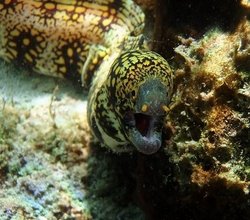
The Snowflake Eel or Echidna nebulosa is a relatively easy to care for saltwater eel that is found around Hawaii, and the tropical Indo-Pacific. Also known as the Snowflake Moray Eel, these fish have a great sense of smell which helps to make up for their poor eyesight. They have the typical eel shaped body with blotchy stripes, that can sometimes resemble snowflakes. This species of eel can grow to about 28" in maximum length. You can check out the Snowflake Eel underwater in the video below...
If you do plan on housing a Snowflake Eel in an aquarium setting, be sure that you have a tight lid as they tend to try and escape. The following water conditions are recommended, temp. 72-78F, sg 1.020-1.026; pH 8.1-8.4; and dKH 8-12. An aquarium of 30 gallons or more is acceptable. Snowflake Eels can be fed clam, crab, shrimp, squid, scallop and fish meat.Please note: These fish can go into hibernation mode and won't be seen or eat for several weeks. Be sure to provide them with plenty of hiding spots to keep them happy. Compatible tankmates for the Snowflake Eel include large semi-aggressive fish, such as Lionfish, Tangs, Triggerfish and Wrasses.
If you have any additional information about the Snowflake Eel including aquarium tips please leave us a comment below.