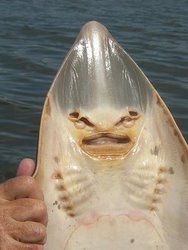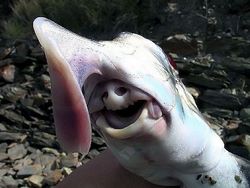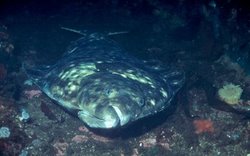








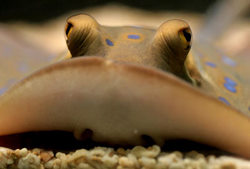




















 The Fiddler Stingray or Trygonorhina fasciata is a just one of the many different species of Stingrays in the world. This particular species is tan with beautifully designed black markings on its body. The Fiddler Stingray has a venomous tail that it used to protect itself from potential predators. Take great care if you are around this type of Stingray in the Coral Sea where they originate.
Fiddler Stingrays go by several different names including Southern Fiddler, Banjo Shark, Dumeril's Shovelnose Ray, Green Skate, Magpie Ray and Parrit. They are occasionally kept in an aquarium setting, but should only be purchased by experienced individuals with a very, very large aquarium. At least 360 gallons is recommended with the following water conditions, 72-78° F, dKH 8-12, pH 8.1-8.4, sg 1.020-1.025. This Stingray can grow to 3' in length.
 A couple things to note if you are going to try and keep this Stingray as a pet. Number one, the Fiddler Stingray will often cover itself with soft substrate on the bottom of the tank. In the wild they are often hard to see as they lie in wait for their prey to pass by. Number two, never expose this fish to copper-based medications, it will cause a bad reaction and sometimes death. Finally, this Stingray should be fed squid or live feeder shrimp in the beginning to get it to accustom to the aquarium. After this it will eat scallops, pieces of fresh marine fish along with the live feeder shrimp. You can check out the Fiddler Stingray in its nature setting in the video below...